THE CUSTOM OF THE CAMEL - DEVE GIUNIOU (THE DAY OF THE CAMEL)
Symbolism
The custom of the camel symbolized the exchange of wishes for a "good year", fertility and health, while another version refers to the influences of some travelers in the regions of Asia and copying these elements or even the fact that trade came to Thrace from Byzantium and the East with camels. In any case, the symbolism varies depending on the time period in which we encounter the custom, from antiquity and Byzantium to the years of the Turkish rule and our time.
Detailed description
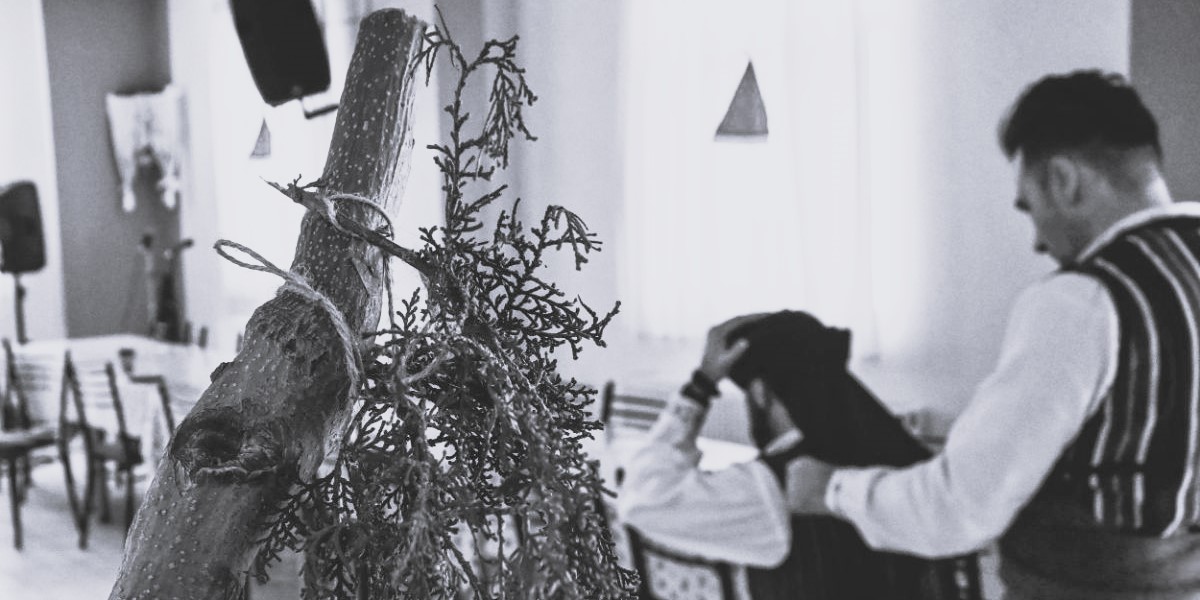
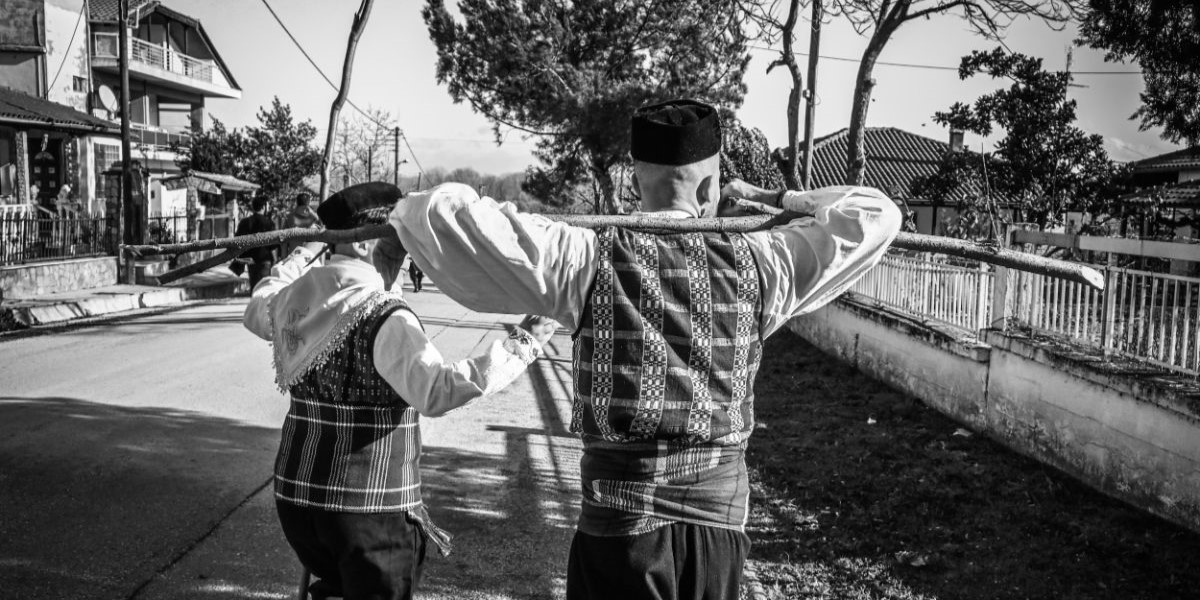
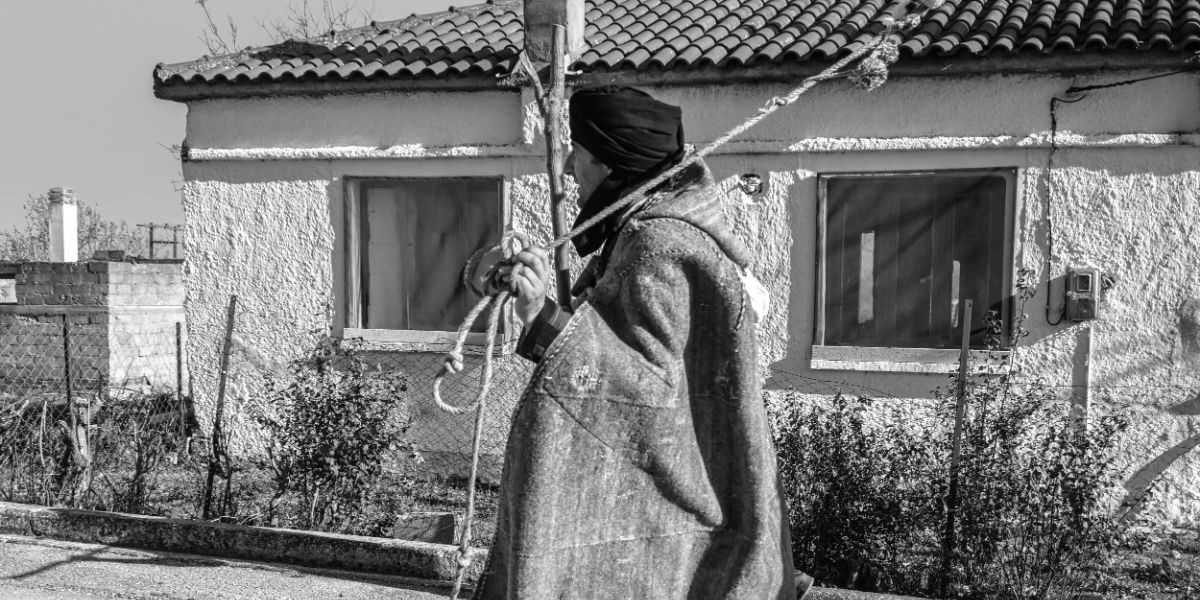
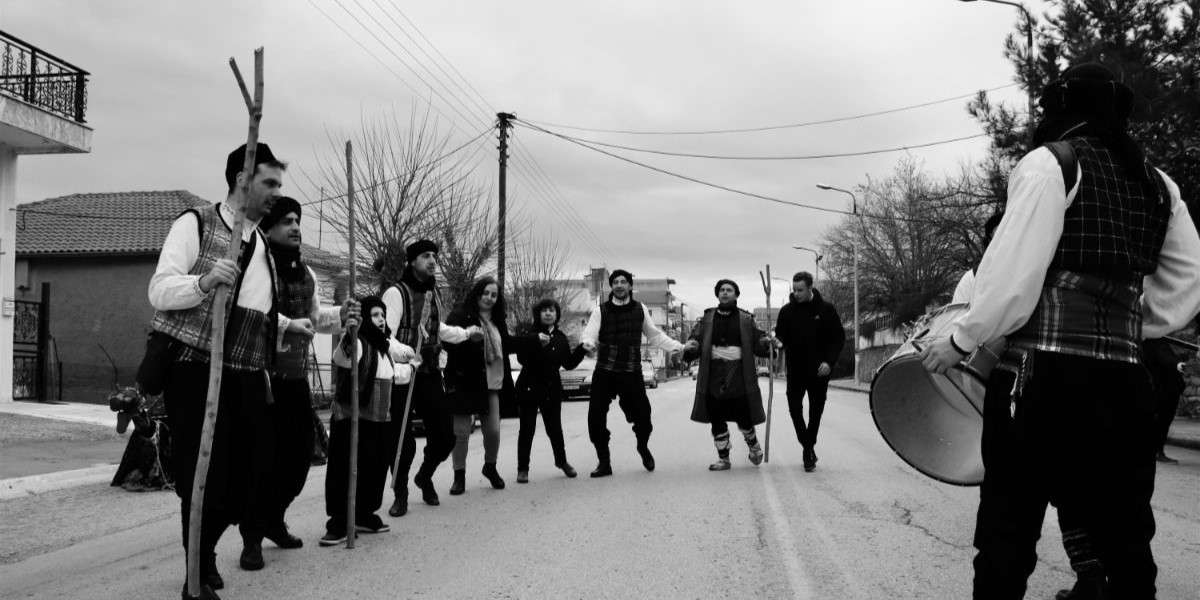
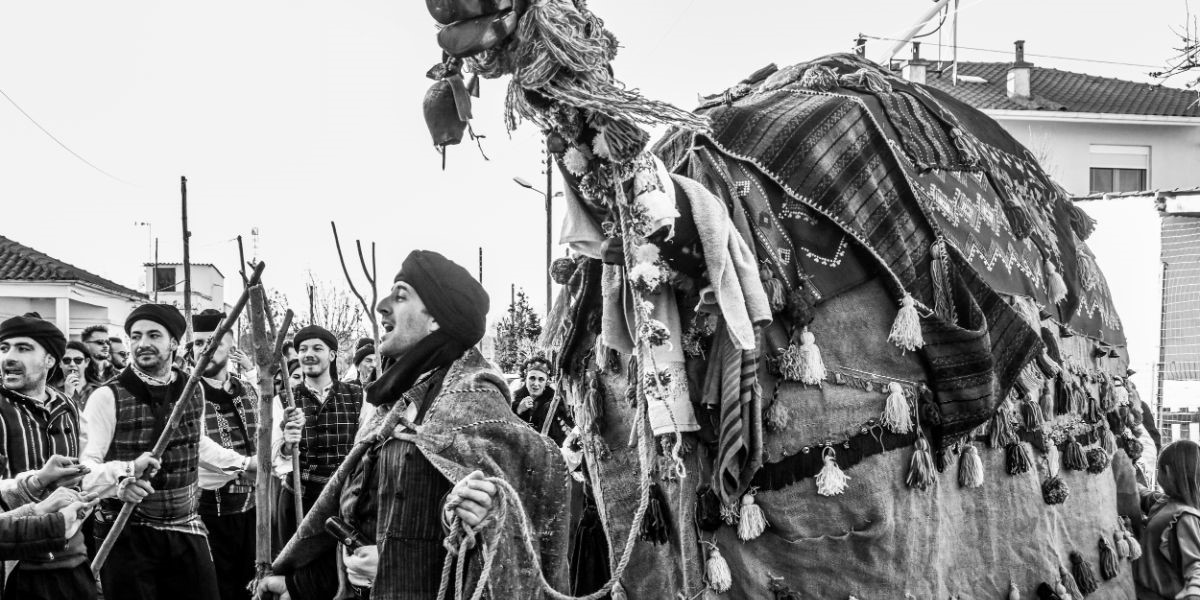
The revival of the custom started in the settlement of Inoi from the first years of settlement of its inhabitants and is held on the second day of Christmas, it continued until the 50s. From 2008 until today the revival of the custom is organized every year by L.P. S Inoi "To Krasochori". The construction of the camel is done by the young men of the settlement a few days before the custom. The camel's frame is made of mulberry sticks on which blankets and light woven fabrics are applied, the head is a wooden dummy head with a mouth that opens and closes elaborately with a rope that passes inside its frame. The camel is accompanied by the camel driver or camel rider or devetzi and a group of young men holding sticks of mulberry branches, direct it. Two boys whose body is hidden lift it up and show only their four legs as they march through the settlement with appropriate movements pretending to walk. When entering the courtyards of the houses, the camel dances to the accompaniment of musical instruments to the rhythm of Baiduska with the melody of "Devende geldi", which is a free men's dance with a step of alternating lifts. The custom of the camel starts in the morning with a blessing at the church of Agios Dimitrios Inoi, then it wanders through the streets of the city of Orestiada and the neighborhoods of Inoi and ends at the 4th Primary School of Orestiada with a traditional feast with the sounds of live music and an offer of a traditional dish with meat called “ Kavourmas’’ from the members of the Association.


 EN
EN  EL
EL